












Colombia’s President Accuses U.S. of Killing Colombian Citizens in Caribbean Strike
Colombian President Gustavo Petro claims a U.S. military strike in the Caribbean killed Colombian citizens aboard a “Colombian boat.” The White House calls the claim “baseless,” as regional leaders condemn the strikes as potential violations of international law

In a sharp escalation of tensions between Washington and Latin America, Colombian President Gustavo Petro has accused the United States of killing Colombian citizens in a recent military strike on a vessel in the Caribbean Sea.
Petro stated on social media that “indications show that the last boat bombed was Colombian with Colombian citizens inside it,” calling on families to come forward with information.
The U.S. has carried out at least four strikes in international waters since September 2, killing 21 people, which it claims were “narco-traffickers” operating near Venezuela. However, the administration has not released evidence, passenger manifests, or forensic details about those killed.
U.S. Dismisses Claim as “Baseless”
The White House swiftly rejected Petro’s assertion, calling it “baseless and reprehensible” and demanding a public retraction.
“While the U.S. and Colombia have policy differences, we remain committed to close cooperation on shared priorities, including regional security,” a spokesperson said.
The U.S. insists the strikes targeted vessels carrying illegal narcotics—not civilians—but has provided no proof of the boats’ nationalities, cargo, or the identities of those aboard.
Regional Outcry and Legal Concerns
Petro warned that the strikes mark the opening of a “new war scenario: the Caribbean” and accused the U.S. of waging “a war for oil, not against smuggling.”
His remarks echo growing condemnation across Latin America, where leaders fear the operations violate international maritime law and set a dangerous precedent for unilateral military action in shared waters.
In response, Petro has called for an emergency meeting of Caribbean foreign ministers to address the issue.
Congress Fails to Restrain Presidential War Powers
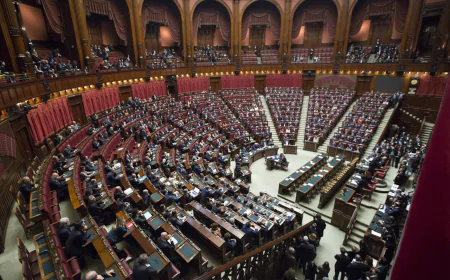
On Wednesday, the U.S. Senate rejected a bipartisan measure (48–51) that would have required President Donald Trump to seek congressional approval before using military force against vessels in the Caribbean.
The proposal, led by Senators Adam Schiff (D) and Tim Kaine (D), aimed to reassert Congress’s constitutional authority over war-making—a power increasingly bypassed by recent administrations.
A Shift to “Armed Conflict” Doctrine
The strikes follow a leaked memo revealing the Trump administration now classifies its anti-drug operations as a “non-international armed conflict”—a legal framework that allows the U.S. to treat suspected traffickers as “unlawful combatants” and justify lethal force without trial, due process, or public oversight.
Critics warn this blurs the line between law enforcement and warfare, potentially enabling extrajudicial killings under the guise of counter-narcotics policy.
What’s Next?
With no independent investigation, no transparency, and no accountability, families of the deceased may never know the truth.
As Petro said:
“There is no war against smuggling; there is a war for oil—and it must be stopped by the world.”